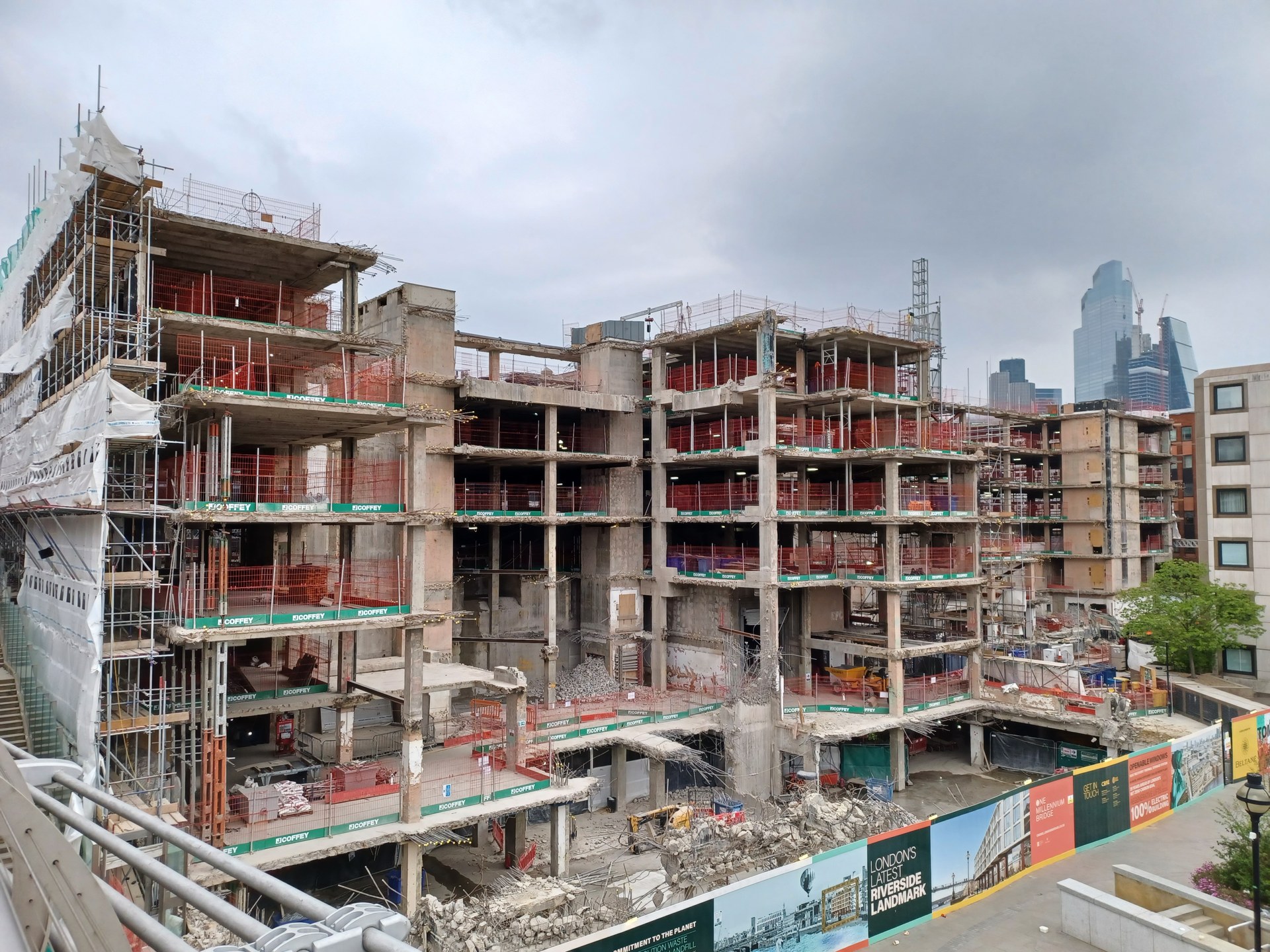

Controlled internal removal for commercial refurbishment and reconfiguration, with retained elements protected and structural boundaries established before work starts.
Agreed package scope
- Verified non-load-bearing masonry and blockwork removal
- Internal wall and partition removal
- Screed and flooring breakout
- Redundant fixtures and built-in elements
- Localised concrete breakout only where appropriately designed and authorised
- Making safe and protecting retained elements
- Coordination of specialist dismantling where required
- Debris removal and clearance
Control the extent of removal
The package starts with a marked-up removal plan, relevant surveys and an understanding of the retained structure. Breakout depth, floor construction, embedded services and adjacent finishes need to be established before tools or methods are selected.
Non-load-bearing blockwork, screeds and localised breakout can carry significant risks even when they are not part of the primary frame. Dust, vibration, manual handling, falling material and floor-loading limits are considered in the method and waste routes.
Structural work is a separate assessment
Structural demolition, load-bearing alterations, temporary works and major concrete or steel demolition are separately assessed specialist packages. Suitable engineering, competent specialists, approvals and management arrangements must be established before an appointment is accepted.
No load-bearing wall, column, beam or structural slab is treated as routine strip-out. Engineering information, sequencing, temporary support, competent specialist delivery and any relevant approvals must be resolved before structural work is accepted.
Protect the retained building
Works may require barriers, protection of finished routes, controlled debris movement and agreed inspection points. Service isolations and fire or security interfaces are coordinated with the responsible project parties.
A combined internal-removal and waste package can provide a clearly defined handover to refurbishment trades. The quotation identifies making-good responsibilities and any excluded reinstatement, not only the removal activity.
Commercial control
Review the tender information
Drawings, specifications, schedules, surveys and the proposed handover condition establish what is to be removed and what is to remain.
Resolve the site constraints
Access, services, occupancy, working hours, survey limitations and waste types are reviewed before pricing.
Issue an itemised return
Labour, supervision, protection, segregation, removal and handover are identified in the agreed package, with exclusions and provisional items stated.
Agree the programme and interfaces
Isolations, specialist appointments, approvals, collection windows and follow-on trades are coordinated with the principal contractor.
Deliver and hand over
Removal follows the agreed arrangements. Waste movements are documented and the specified handover condition is checked with the project team.
Surveys, services and retained structure
The removal schedule is reviewed against relevant pre-construction information under the CDM Regulations 2015. Refurbishment/demolition asbestos surveys should cover the areas and fabric affected by intrusive works, with limitations resolved before work starts. Service identification, authorised isolation and competent disconnection are agreed with the responsible parties, not assumed from a vacant building.
Structural demolition, load-bearing alterations, temporary works and major concrete or steel demolition are separately assessed specialist packages. Suitable engineering, competent specialists, approvals and management arrangements must be established before an appointment is accepted.
Apsley does not advertise licensed asbestos removal. Suspected asbestos is not treated as ordinary demolition waste; any required surveying or removal must be arranged through appropriately competent specialists, including licensed contractors where the work requires a licence.
Method, access and site controls
Package-specific risk assessments and method statements address sequencing, safe access, manual handling, dust, noise, retained finishes and public or tenant interfaces. Occupied premises may need agreed segregation, working hours and phased handovers. Temporary works, permits and notifications depend on the scope and site; not every document or approval applies to every project.
Waste movements and duty of care
The site currently records waste carrier registration CBDL508213. Its current status, registration tier and suitability for the proposed activities must be confirmed during procurement. Registration as a carrier does not authorise waste treatment or disposal.
Waste is classified and segregated as appropriate, with suitable containment and authorised destinations identified before removal. Non-hazardous transfers require appropriate waste transfer documentation; hazardous waste may require consignment documentation and specialist arrangements. Reuse, recovery and recycling are considered where practical, without promised diversion percentages.
Skip, container, grab or tipper arrangements are sourced through appropriate suppliers to suit access, loading and waste types. We do not claim an owned skip fleet, processing facility, landfill or recycling centre.
Compliance and company documentation
Procurement questions
Can internal walls be removed without engineering advice?
Not on the basis of appearance alone. Their structural role, service content and effect on adjacent elements must be established; engineering input is required where stability or load paths are affected.
Do you undertake major concrete or steel demolition in-house?
This is not represented as a routine in-house capability. Major structural works are separately assessed specialist packages subject to suitable design, competence and management.
Can removal and clearance be tendered together?
Yes, where suitable for the project. The extent of breakout, protection, segregation, collection arrangements and final condition are agreed as one scope.