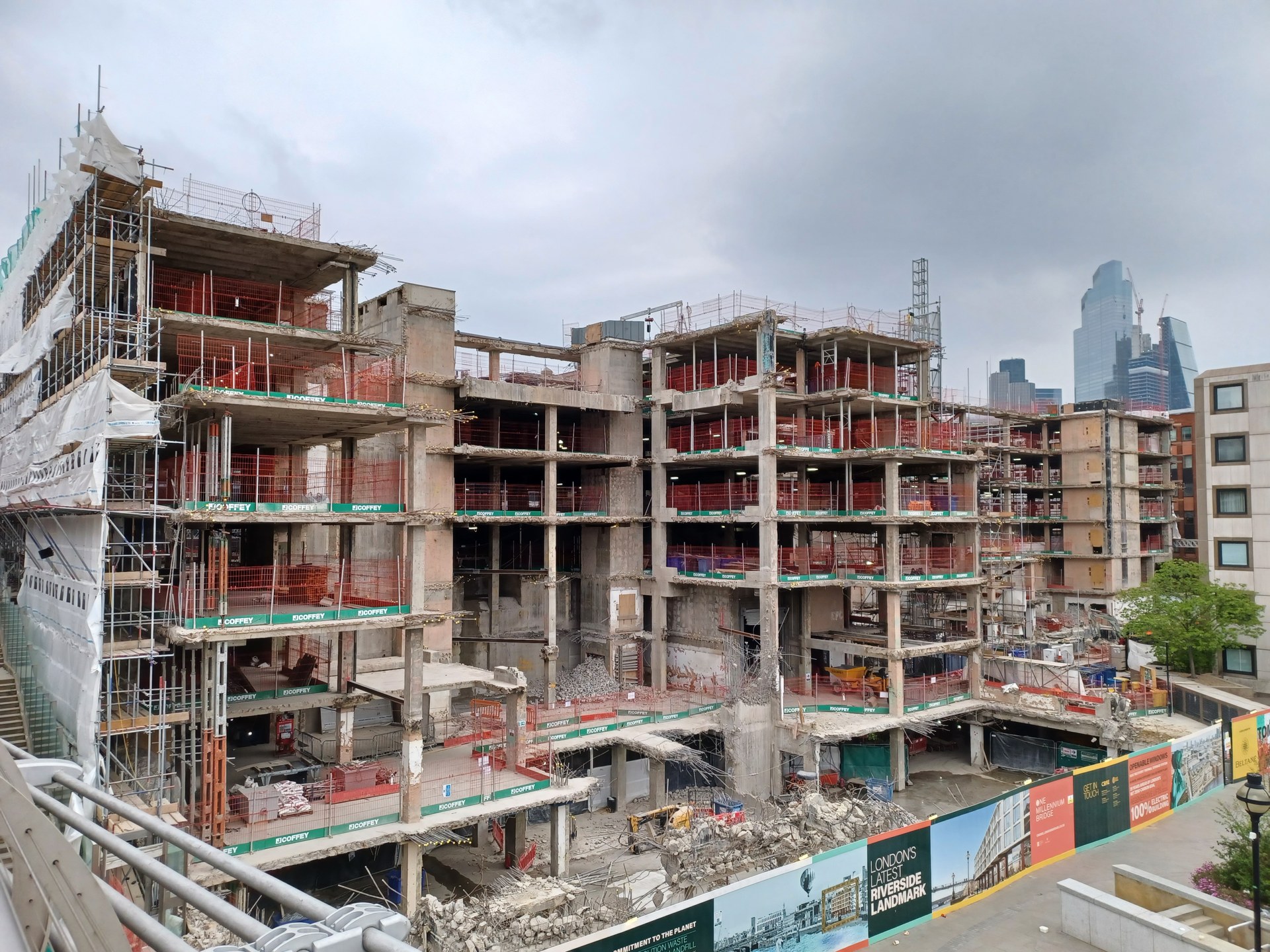

Soft strip is the selective removal of agreed non-structural fit-out. It prepares a building for refurbishment or a later construction phase while protecting elements that must remain.
Apsley Contracting assesses commercial requirements in London and the South East. See our soft strip demolition service for scope and tender enquiries.
Define what stays and what goes
A removal schedule should identify partitions, ceilings, flooring, joinery, fixtures and redundant installations individually. Marked-up plans help distinguish a total strip from selective work within a retained fit-out.
The same building may contain landlord services, tenant installations and shared routes. Ownership and permission to remove each item should be established before pricing.
Typical scope and boundaries
Suspended ceilings, floor coverings, office furniture, shop fittings, kitchens and sanitaryware can form part of a package. Redundant mechanical and electrical installations are removed only following authorised isolation and competent disconnection.
“Non-structural” is not a visual judgement. The role of walls, floors and linings must be checked against available information; structural alterations require separate assessment.
Survey information and safe sequencing
Intrusive refurbishment needs asbestos information appropriate to the fabric affected. Survey access limitations and excluded areas should be resolved before disturbing materials. Unexpected suspect materials require work to stop in the affected area and competent assessment.
The method also considers dust, noise, floor loading, debris routes, manual handling and retained fire or security systems. Occupied premises can require phased segregation and handover.
Specify the completion condition
A cleared shell might still have adhesives, fixings, floor residues or redundant penetrations. State what is to be removed, protected, made safe or made good, and allocate reinstatement responsibilities.
Waste segregation, collection and documentation can be included in the same scope. A clear handover schedule helps the next contractor understand the condition it will receive.
Discuss your scope or issue an ITT
Send the project location, removal schedule, drawings, relevant surveys, access constraints and intended programme. We will review the requirements and confirm the next steps.
Use the quick enquiry for an early discussion or submit a developed tender pack through our Demolition & Waste enquiry.