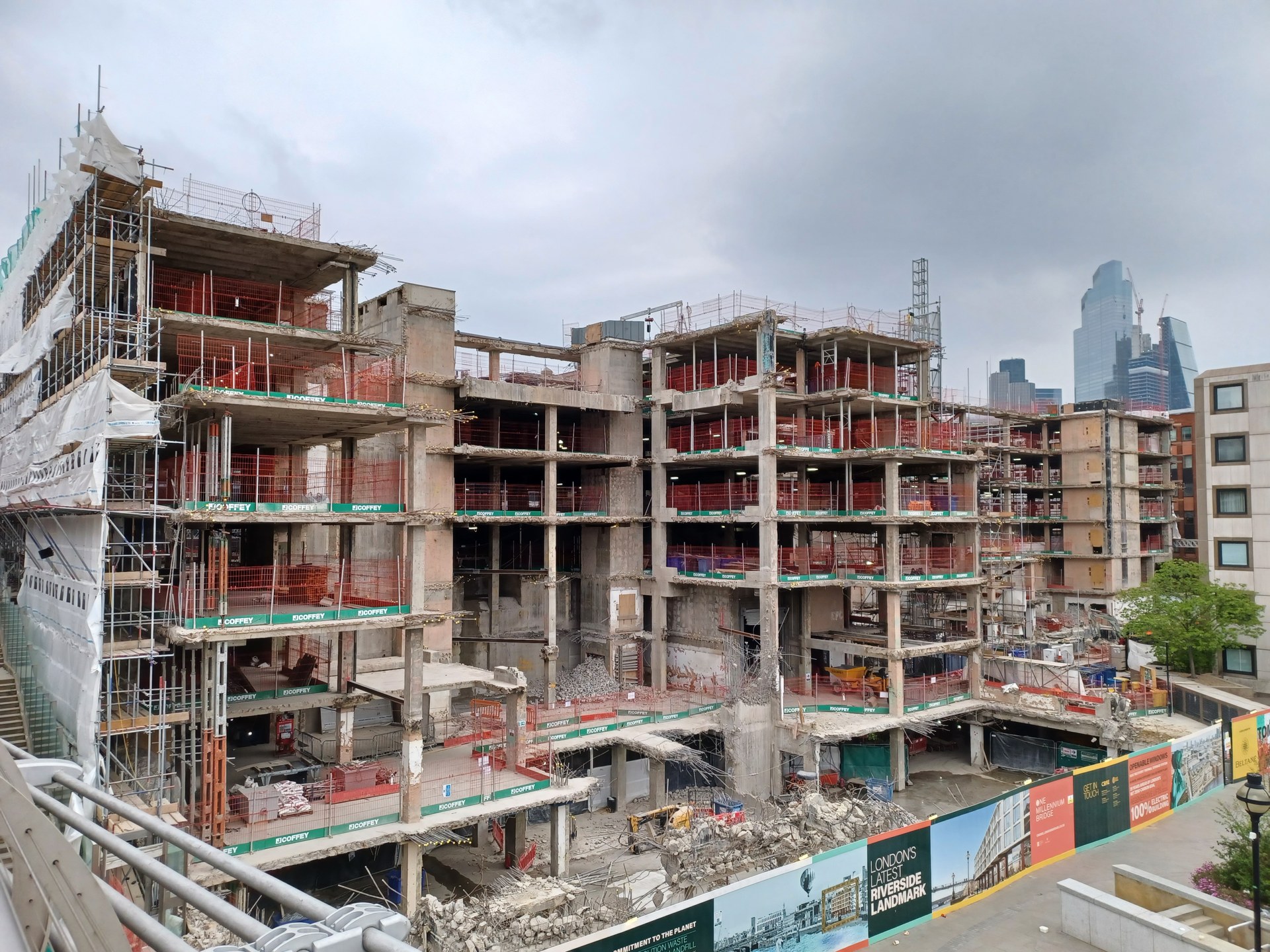

Soft strip and structural demolition are not interchangeable descriptions. The distinction affects engineering, competence, temporary works, sequencing and procurement responsibilities.
Apsley Contracting assesses commercial requirements in London and the South East. See our internal demolition service for scope and tender enquiries.
Non-structural removal
Soft strip normally concerns fit-out and non-structural components such as ceilings, coverings, fixtures and verified non-load-bearing partitions. It does not mean that every internal element can safely be removed.
Existing drawings, inspections and appropriate specialist input should establish what supports loads, provides stability or protects services and escape routes.
Changes to load paths or stability
Removing a load-bearing wall, beam, column or structural slab can affect the entire building, including neighbouring structures. The design and sequence must address the retained building during every stage, not only its final condition.
Temporary support and demolition sequence are engineering matters. Structural demolition, load-bearing alterations and major concrete or steel removal are separately assessed specialist packages, not routine Apsley in-house strip-out.
Internal demolition still needs control
Non-load-bearing masonry and screed breakout can involve vibration, dust, heavy debris and hidden services. Local concrete removal requires appropriate design and authorisation where relevant.
A method should address safe access, loading, material movement, dust suppression, retained finishes and interfaces with occupants or other trades.
Procure the correct package
Describe the elements and extent of removal rather than relying on a broad demolition label. Issue surveys, engineering information and retained-element drawings with the tender.
Confirm competent specialist appointments, relevant approvals and management arrangements before structural work is accepted. Asbestos surveying and removal are separate considerations with their own competence requirements.
Discuss your scope or issue an ITT
Send the project location, removal schedule, drawings, relevant surveys, access constraints and intended programme. We will review the requirements and confirm the next steps.
Use the quick enquiry for an early discussion or submit a developed tender pack through our Demolition & Waste enquiry.