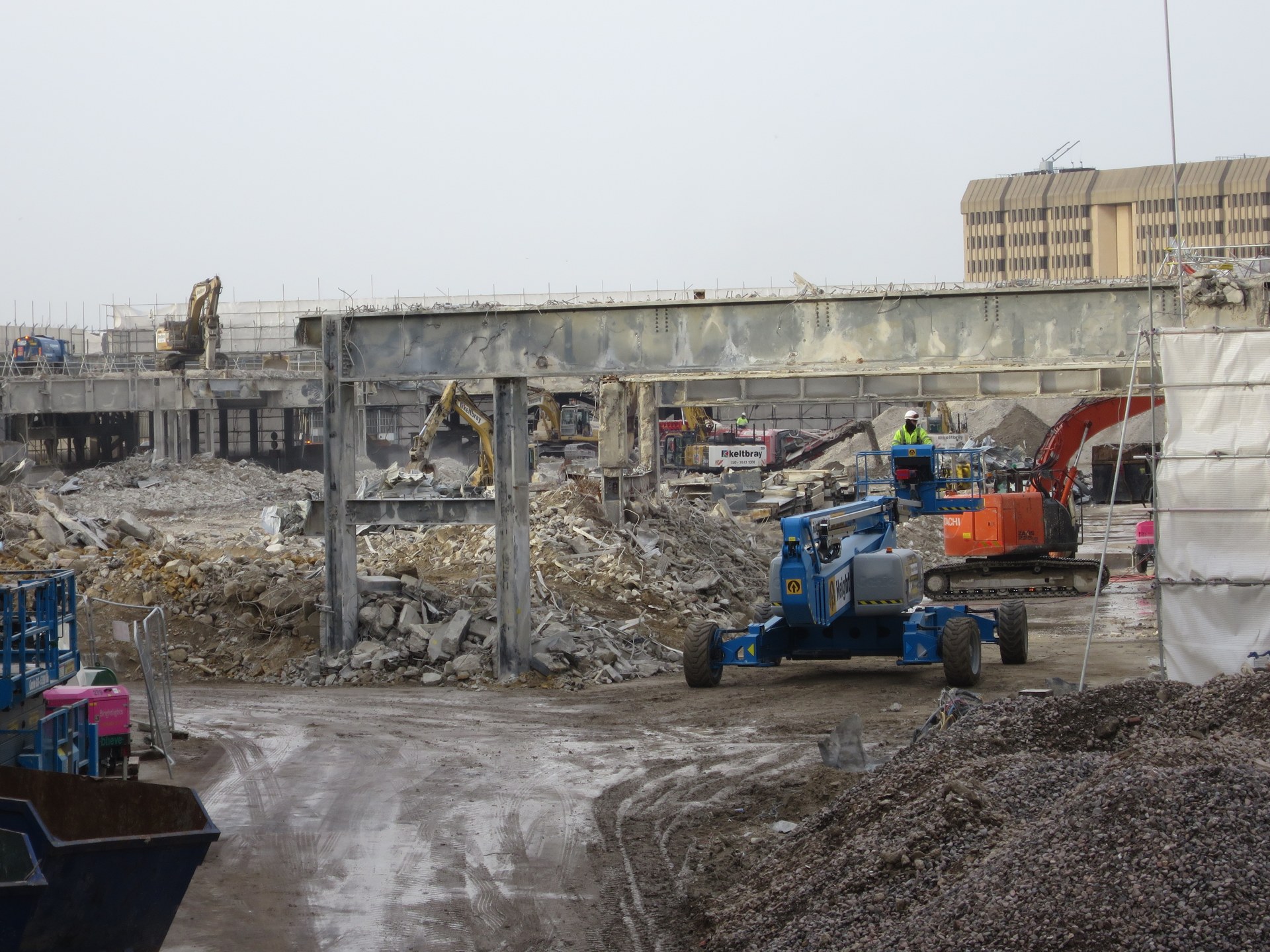

Waste removal coordinated around live construction programmes: defined waste streams, suitable collection arrangements and documented movements to appropriate destinations.
Agreed package scope
- Construction and refurbishment waste
- Soft-strip and demolition arisings
- Segregated timber, metal, plasterboard and clean inert waste
- Mixed construction waste following classification
- Skip and container arrangements through suitable suppliers
- Grab, tipper or other appropriate haulage arrangements
- Site clearance and redundant material removal
- Phased collections and restricted-access city sites
- Waste transfer documentation and appropriate disposal routes
- Practical reuse, recovery and recycling opportunities
Construction waste, not simply excavation spoil
Refurbishment waste may combine timber, plasterboard, metals, packaging, fixtures and mixed fit-out arisings. These streams have different storage, transport and destination requirements from bulk excavation spoil. Our existing Muck Away & Site Waste service remains focused on soil, clean inert materials and groundworks arisings.
A waste-management package may be procured on its own or integrated into soft strip, property clearance and enabling works. Recurring collections can be assessed around the agreed programme, material quantities and supplier availability.
Plan segregation before removal starts
Identify likely waste streams from the removal schedule and surveys. Timber, metal, plasterboard and clean inert materials should be kept separate where practical and where the receiving facility requires it. Contamination or hazardous constituents must be considered before a load is described as clean or inert.
Storage space, protected loading routes, container positions and site housekeeping influence whether segregation is workable. Collections should be phased so waste does not obstruct escape routes, overload floors or compromise access for follow-on trades.
Restricted access and phased collections
City sites may have limited loading windows, shared entrances, height restrictions or no room for a standing skip. Collection type, vehicle access and any highway permissions are assessed with the project team and suppliers rather than promised before appraisal.
Provide waste descriptions, expected volumes if known, collection frequency, access dimensions, loading responsibilities and operating hours. The quotation identifies containment, labour, transport, destination assumptions and documentation within the agreed scope.
Documentation and authorised destinations
Duty of care is not discharged simply by booking a collection. Waste descriptions, classification, carrier checks and appropriately authorised receiving facilities must suit the actual material. Non-hazardous transfers use appropriate waste transfer documentation; hazardous movements may require consignment procedures.
The website records carrier registration CBDL508213, subject to confirmation of current status and activity coverage. A carrier registration does not authorise treatment, disposal or every category of waste. No owned processing facility, landfill, recycling centre or dedicated skip fleet is claimed.
Reuse, recovery and recycling are considered where practical. We do not publish invented recycling percentages, landfill-diversion targets or guarantees that every material can be recovered.
Commercial control
Review the tender information
Drawings, specifications, schedules, surveys and the proposed handover condition establish what is to be removed and what is to remain.
Resolve the site constraints
Access, services, occupancy, working hours, survey limitations and waste types are reviewed before pricing.
Issue an itemised return
Labour, supervision, protection, segregation, removal and handover are identified in the agreed package, with exclusions and provisional items stated.
Agree the programme and interfaces
Isolations, specialist appointments, approvals, collection windows and follow-on trades are coordinated with the principal contractor.
Deliver and hand over
Removal follows the agreed arrangements. Waste movements are documented and the specified handover condition is checked with the project team.
Surveys, services and retained structure
The removal schedule is reviewed against relevant pre-construction information under the CDM Regulations 2015. Refurbishment/demolition asbestos surveys should cover the areas and fabric affected by intrusive works, with limitations resolved before work starts. Service identification, authorised isolation and competent disconnection are agreed with the responsible parties, not assumed from a vacant building.
Structural demolition, load-bearing alterations, temporary works and major concrete or steel demolition are separately assessed specialist packages. Suitable engineering, competent specialists, approvals and management arrangements must be established before an appointment is accepted.
Apsley does not advertise licensed asbestos removal. Suspected asbestos is not treated as ordinary demolition waste; any required surveying or removal must be arranged through appropriately competent specialists, including licensed contractors where the work requires a licence.
Method, access and site controls
Package-specific risk assessments and method statements address sequencing, safe access, manual handling, dust, noise, retained finishes and public or tenant interfaces. Occupied premises may need agreed segregation, working hours and phased handovers. Temporary works, permits and notifications depend on the scope and site; not every document or approval applies to every project.
Waste movements and duty of care
The site currently records waste carrier registration CBDL508213. Its current status, registration tier and suitability for the proposed activities must be confirmed during procurement. Registration as a carrier does not authorise waste treatment or disposal.
Waste is classified and segregated as appropriate, with suitable containment and authorised destinations identified before removal. Non-hazardous transfers require appropriate waste transfer documentation; hazardous waste may require consignment documentation and specialist arrangements. Reuse, recovery and recycling are considered where practical, without promised diversion percentages.
Skip, container, grab or tipper arrangements are sourced through appropriate suppliers to suit access, loading and waste types. We do not claim an owned skip fleet, processing facility, landfill or recycling centre.
Compliance and company documentation
Procurement questions
Can you organise recurring construction-waste collections?
Yes, subject to assessment and suitable supplier arrangements. Waste streams, frequency, access, storage and collection responsibilities need to be agreed for the project or portfolio.
Does a waste carrier registration allow waste processing?
No. Carriage, treatment and disposal are different activities. Relevant registration, permits or exemptions and an authorised destination must be checked for the proposed movement and activity.
Can plasterboard go into any mixed waste container?
Do not assume so. Classification, contamination and the receiving facility’s acceptance conditions must be checked; segregated plasterboard arrangements should be planned where appropriate.
Do you remove asbestos as standard construction waste?
No. Asbestos requires specialist assessment and appropriate handling, carriage and destination arrangements. Licensed removal, where required, must be undertaken by a suitably licensed specialist.