Winter 2026/27
Why Weather-Triggered Gritting Makes Sense for Commercial Property Managers
Understand surface temperatures, moisture, treatment authorisation and repeat visits when planning winter maintenance for managed properties.
By Apsley Construction · Published
When winter approaches, facilities managers face a familiar question: when should external areas be gritted?
Waiting until ice appears can leave dangerous conditions in place before help arrives.
Arranging treatment every night, regardless of conditions, is not necessarily the most effective use of winter-maintenance resources.
A structured, forecast-led arrangement provides a practical alternative.
At Apsley Construction, we offer seasonal monitoring with gritting activated against clearly agreed weather conditions.
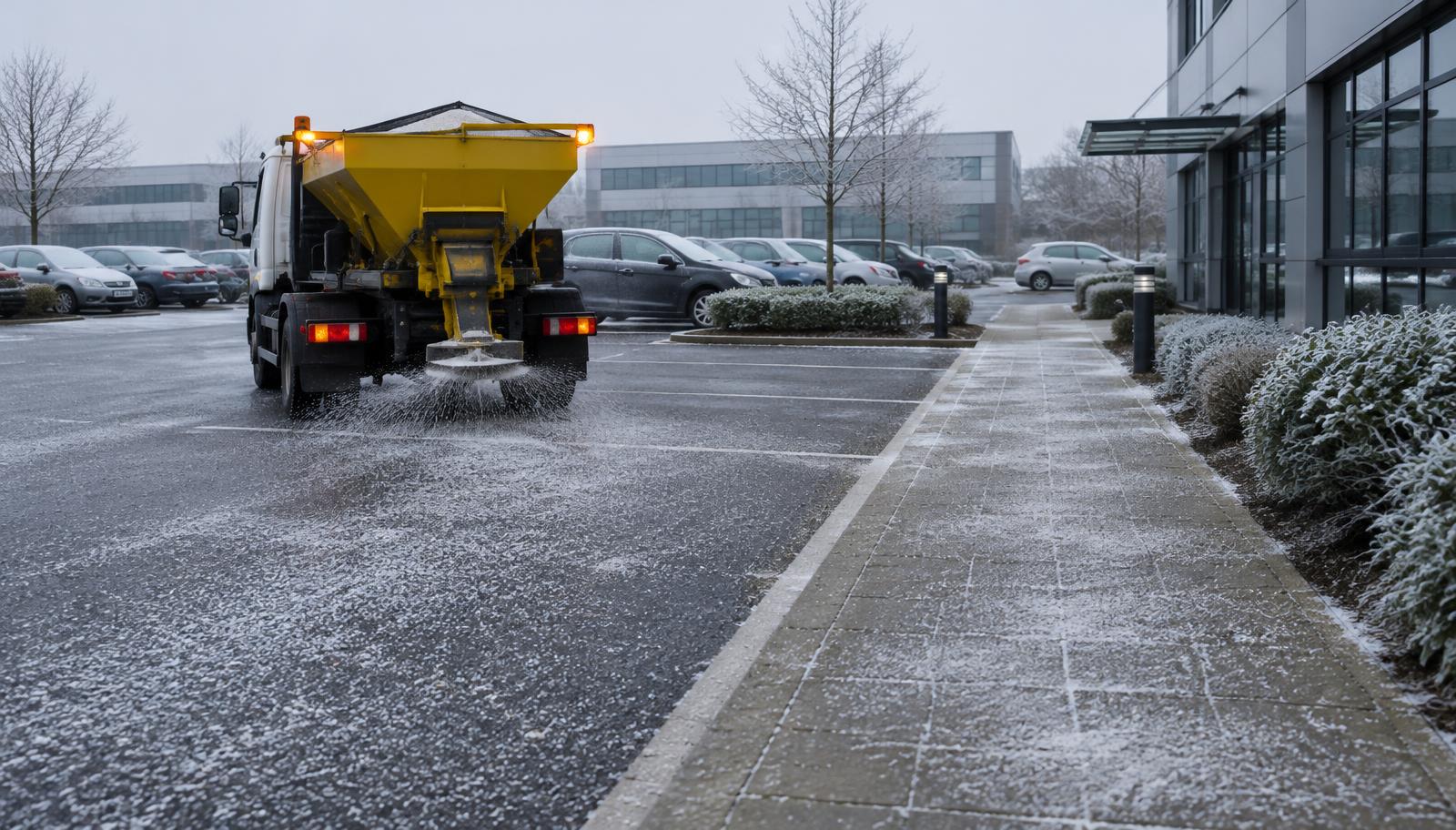
Our commercial winter gritting and snow-clearance service supports agreed seasonal arrangements for single properties and suitable multi-site portfolios.
Why a Fixed Calendar Alone Isn't Enough
A mild January evening may require no treatment, while a clear night in early November can create significant frost risk.
Temperatures also vary between locations.
Shaded pedestrian routes, exposed car parks, ramps and poorly drained areas can present different risks within the same development.
The objective should be to make treatment decisions using relevant weather information and an understanding of the actual site.
What Triggers a Gritting Treatment?
The precise triggers should be documented in the property's winter-maintenance plan.
Typical considerations include:
Ground-Surface Temperature
The temperature of paving or road surfaces is particularly relevant when assessing freezing risk.
A forecast air temperature alone does not always describe conditions at ground level.
Moisture and Frost Formation
Wet paving combined with freezing surface temperatures may create an ice risk.
Morning dew can also freeze on a sufficiently cold surface, even without overnight rainfall.
Rain Followed by Freezing Temperatures
This can require particular attention.
Rain may dilute or wash away previously applied salt, leaving surfaces vulnerable when temperatures subsequently fall.
Treatment timing and the potential need to return should therefore be considered.
Snowfall and Freezing Precipitation
Forecast snow may justify precautionary treatment, while accumulated or compacted snow can require physical clearance.
Our Monthly Monitoring Approach
Our winter service is designed to reduce the amount of day-to-day coordination required from busy property managers.
Under an agreed seasonal arrangement, relevant forecasts are monitored throughout the winter period.
When a treatment trigger is reached, attendance is coordinated in accordance with the agreed plan.
This avoids relying solely on individual managers to telephone contractors whenever the temperature drops.
The approach is particularly useful for companies overseeing several commercial or residential properties.
The fixed monthly arrangement covers ongoing risk-based monitoring throughout the agreed season, not a single weather check each month. Treatment thresholds, attendance windows and authorisation arrangements are agreed with each client.
Priority Gritting Versus Full-Site Coverage
Not every part of a site carries the same risk or requires the same treatment priority.
A commercial property may have heavily used pedestrian entrances, access ramps and connecting footpaths alongside less frequently used hardstanding.
We can help identify sensible priority treatment areas.
Where operational requirements justify broader coverage, treatment can also extend across agreed parking areas, internal roads, yards and other suitable external surfaces.
Both approaches can form part of a coordinated winter-maintenance programme.
What Happens When Conditions Remain Freezing?
One treatment does not necessarily remain effective indefinitely.
Further rainfall, vehicle movement, prolonged freezing conditions or accumulating snow may reduce treatment effectiveness.
The maintenance plan should therefore explain how additional treatments are assessed and authorised.
Gritting reduces risk but cannot guarantee that every treated surface will remain free of ice.
Useful Treatment Records for Managing Agents
Facilities managers often need more than a verbal confirmation that a contractor attended.
Where specified, treatment reports can include attendance times, work areas, materials used and supporting photographs.
These provide useful operational records and support ongoing maintenance reviews.
Related seasonal maintenance
Winter planning can also include seasonal facilities maintenance and commercial drainage maintenance to address standing water and blocked gullies. For wider building and estate needs, see our commercial facilities maintenance service.
Arrange a Commercial Winter Maintenance Plan
If you manage offices, industrial premises, residential developments, retail properties or multiple commercial sites across London and Surrey, speak to Apsley Construction.
We can review your site's operational requirements and develop a weather-led gritting arrangement appropriate to the property.
Planning Winter Maintenance for Your Property or Portfolio?
From a single office entrance to multiple commercial estates, Apsley Construction can develop a practical gritting and snow-clearance plan around your site's requirements. Tell us which properties you manage and we will discuss a suitable approach.
Request a winter maintenance assessment or call 020 7046 0845 or email contact@apsleyconstruction.com.